'Summat in t'Air' PODCAST FINAL EPISODE - OUT NOW!
LISTEN HERE

From Second-Hand Books to Life-Saving Flights: The Power of Local Fundraising for Yorkshire Air Ambulance

Accidents and emergencies can happen anywhere, at any time. For those of us who live and work in rural areas of Yorkshire, access to emergency medical care can be especially challenging. That’s where Yorkshire Air Ambulance and their life-saving services come in, providing rapid response and essential on-scene care to people in even the most remote locations.

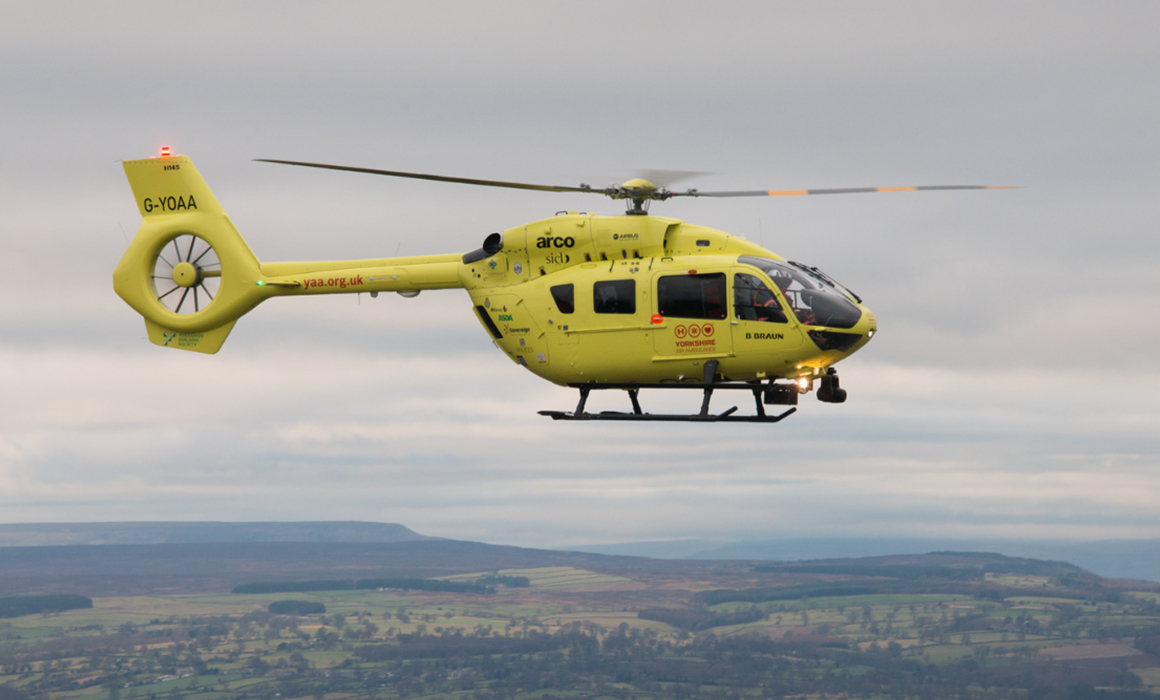
As an independent charity, Yorkshire Air Ambulance relies on volunteers and their fundraising efforts to continue saving lives across the region. It currently costs £19,000 per day to maintain and operate the YAA’s two Airbus H145 Helicopters, based at Nostell Priory in Wakefield and RAF Topcliffe near Thirsk.

In honour of micro-volunteering Day, we’re celebrating the power of small actions and how they work to support Yorkshire Air Ambulance. Whether it’s checking on collection tins or running a second-hand book stall, every little counts. Starting with the inspiring story of a local fundraiser in Goathland who is making a huge difference for the Yorkshire Air Ambulance.

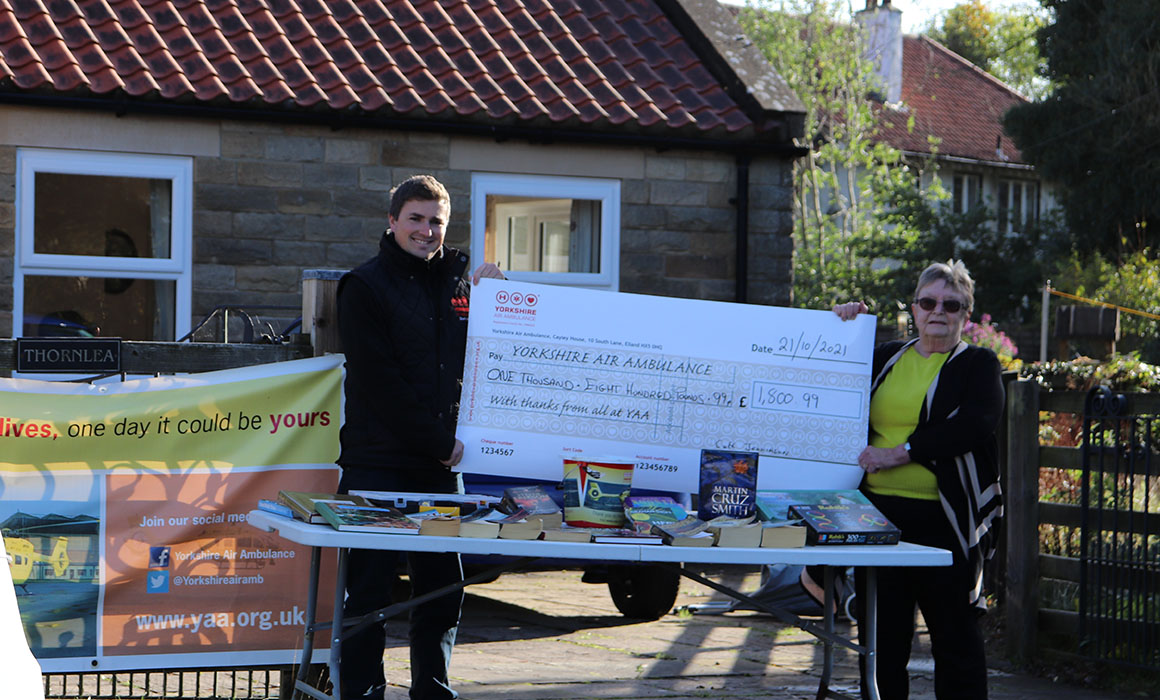
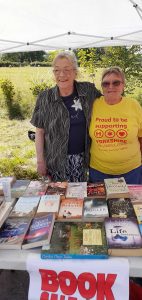
Catherine Jenkinson spends much of her free time fundraising with her much loved second-hand book stall. Catherine’s book stall has received much praise from the East Yorkshire walking community as her stall, which is situated outside of her cottage, is on a main walking route in the village – on the rail trail between Grosmont and Goathland.

A lady with short light hair, wearing a pink jumper places a book on to a shelf containing other books.

Passers-by can choose from a range of books, from fiction and romance to hard-hitting crime thrillers and everything in between. In addition, Catherine occasionally has Jigsaws and DVDs on offer too.

Catherine started her fundraising in 2019 and in just a few short years, has raised over five thousand pounds for YAA, which will contribute towards the charity’s ambitious daily fundraising target.

Speaking of her fundraising achievements, Catherine said, ‘My main motivation for supporting the Yorkshire Air Ambulance is because they don’t discriminate. They will fly out to anyone and everyone and I am happy knowing that my money isn’t just going toward a certain group or niche. You never know when you will need the Air Ambulance, especially in our cold, snowy winters, and this way I feel as if I am supporting my entire community without leaving anybody out.

Although it started as something that I wanted to do, it truly has grown into a community thing, and now I feel as if I couldn’t do it without local people supporting me by donating their books to my stall’.

Yorkshire Air Ambulance Community Fundraiser, Keiron Hardwick, who works closely with Catherine, said, ‘We are tremendously grateful for the unwavering dedication and commitment shown by Catherine. The funds raised through her bookstall initiative all greatly contribute to keeping our helicopters in the sky and saving lives.

Catherine is known for her kind and charitable personality and has spent much of her free time raising money for a whole host of charities and businesses and we are so pleased to be one of them. Her hard work and selflessness truly inspires us all. Thank you to Catherine for being an incredible example of what it means to give back to your community’.

Volunteers are considered the beating heart of Yorkshire Air Ambulance, without whom, the charity would not be able to carry out its mission, to save as many lives across Yorkshire as possible. The contributions and presence of the selfless volunteers allow the charity to have such strong relationships within local communities, spreading positive word of mouth and raising awareness.

Throughout 2022, volunteers generously donated their time and energy to support the charity in a variety of ways. Attending more than 900 stalls, hosting more than 300 talks, and participating in over 125 bucket collections. Additionally, they selflessly emptied over 3,700 collecting tins. When adding up all their contributions, it equates to an impressive, estimated total of 10,000 volunteer hours.

Micro volunteering is convenient and accessible to everyone, regardless of busy schedules or other commitments, and usually doesn’t require any intensive training to take part. By participating in micro-volunteering activities, individuals can contribute to their communities and support causes they care about in a bitesize way, sometimes being just a ‘one off’ or alternatively, something people dedicate a short amount of time to on a more regular basis.

Social media support

Use your own social media platforms to help spread the word about a charity’s fundraising or awareness campaigns. By liking, commenting, or sharing posts across Facebook, LinkedIn, Twitter, and Instagram with your followers, you can help raise awareness about the work that the charity is doing and encourage others to get involved too.

Recycle your unwanted clothing

Another way to support Yorkshire Air Ambulance is by donating unwanted clothes and textiles as part of their successful recycling project. Drop-off banks are located across Yorkshire, find your nearest YAA recycling bank here. Once the donation bank is emptied and weighed, Yorkshire Air Ambulance receives a percentage of the profits from the recycled materials. This is a great way to clear out your wardrobe while also supporting a good cause.

Donation collections

One way to micro-volunteer is to sign up to collect donation tins and buckets from around the local area. The YAA’s friendly team of fundraisers can help to point you in the direction of local businesses that support the Yorkshire Air Ambulance and need their tins emptied.

Online reviews

Writing positive reviews of a charity on sites such as Google or Facebook can help to raise their profile and encourage others to support them. By taking just a few minutes to leave a review, you can help the charity to reach more people and make a bigger impact.

DIY projects

If you’re handy with a needle and thread, you could make items to donate, such as knitted blankets or crocheted hats. The Yorkshire Air Ambulance fundraising team always have space on their stalls or at their pop-up shops for items that have a special personal touch, with all the proceeds from each stall helping to keep the crew of doctors and paramedics flying high.

Tackle a sponsored challenge

If you lead an active lifestyle, why not take on a sponsored challenge? Many of Yorkshire Air Ambulances volunteers enjoy completing personal challenges, such as sponsored runs, hikes, and swims, to raise money. Some supporters even like to include their pets, taking part in sponsored dog walks. It only takes a few short minutes to create a Just Giving page for your friends and family to support you. Not only will you be doing something good for your health, but you’ll also be making a difference for a cause you care about.

Why not give it a try and see what kind of impact you can make? Yorkshire Air Ambulance is currently looking for individuals, couples, or small groups of friends to join their friendly team of volunteers across Yorkshire. Find out more about volunteering for Yorkshire Air Ambulance here.

This article was written in partnership with Countryside Jobs Service website, which provides valuable resources and opportunities for those interested in working in conservation, countryside management, and related fields. Find more information on Countryside Jobs Service by visiting their website here. 

Celebrating National Doctors Day with Yorkshire Air Ambulance Doctor: Paul Onion

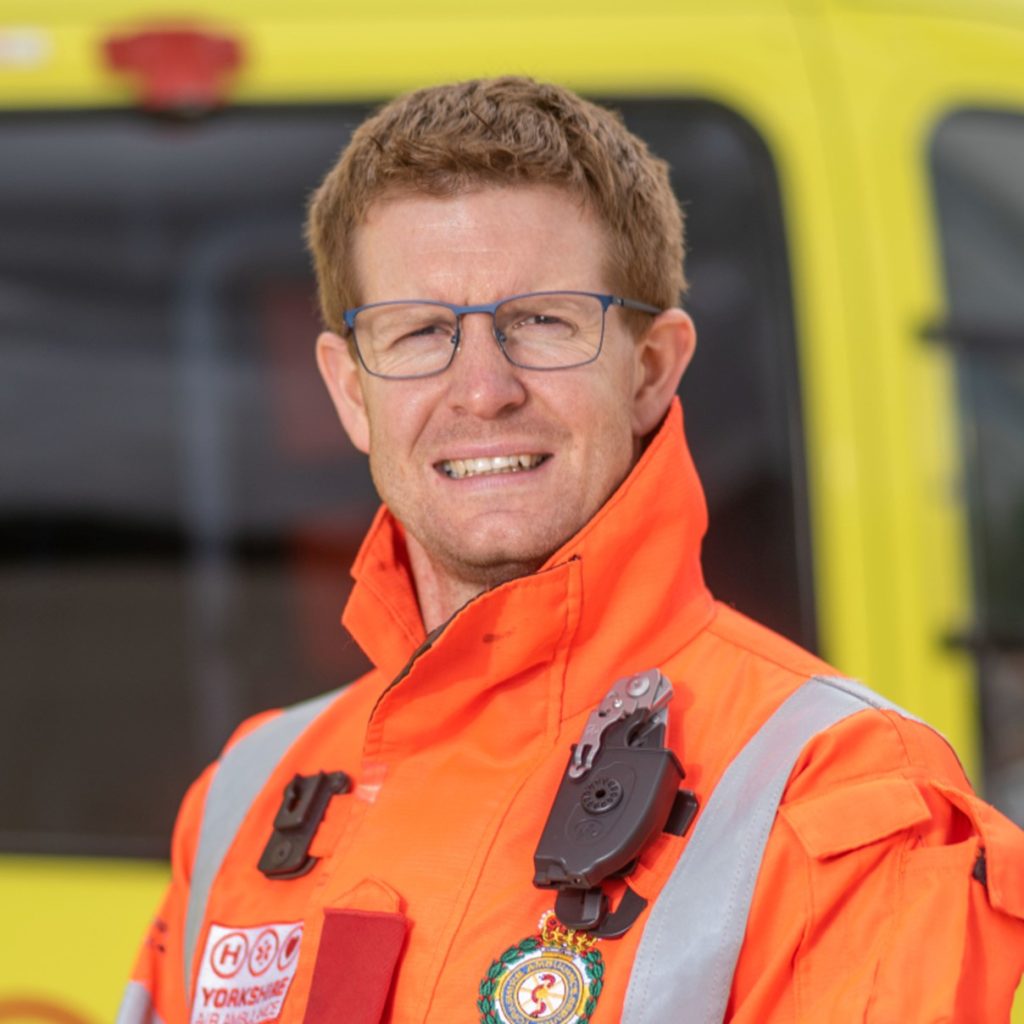
As we celebrate National Doctors Day, we wanted to shine a spotlight on the incredible work of those who take their skills to the skies to save lives across Yorkshire. We spoke with Paul Onion, a seven-year veteran of the YAA team, to hear about the challenges and rewards of this unique and vital role.

Can you tell us about your educational and professional background, and how you became a Yorkshire Air Ambulance Doctor?

While at school, many years ago, I really liked the idea of working as a Paramedic, however, I was always torn between that and working as an Emergency Medicine Doctor within a Hospital. Following 6 years at The University of Leeds, I began working as a fully qualified Doctor in 2002.

I worked across all different areas and practices of medicine to gain wider experience including; surgery, medicine, paediatrics, intensive care, anaesthetics and finally a year working with the Yorkshire Ambulance Service completing sub-specialty training in Pre-Hospital Emergency Medicine. (PHEM)

In addition to this I have worked voluntary for the ambulance service and a local critical care service since 2010. This has allowed me to gain additional experience in the often-challenging pre-hospital environment attending a whole range of patients.

After almost 15 years of training, I was offered a consultant role with the fantastic YAA team in 2017.

How does your role differ from that of a traditional emergency department Doctor?

The advancements in pre-hospital care on the air ambulance means we are now able to deliver the same treatments and interventions to patients that they would receive during their first hour in an emergency department.

This ensures people are getting the same life-saving treatment usually delivered in the resuscitation area of the emergency department.

This includes delivering emergency anaesthetic, blood transfusions, advanced analgesia (painkillers) and even “open heart surgery” for penetrating chest injuries. In the emergency department the above treatments would usually be delivered by a trauma team consisting of 10 people however, we are trained to such a high level, we can give the same treatments in teams of 2 or 3 at scene with the air ambulance. 

What are some of the biggest challenges you face when providing medical care in the air ambulance setting?

There are several differences which make working outside of a hospital setting more challenging.

The most obvious is the environment and working in potentially windy and cold conditions often in muddy field or steep hillsides. Working on roadsides can also be particularly loud meaning communication between the team can be more difficult. In particular, working at night has huge challenges when treating critically injured patients. Comparing this to a warm and light environment within the emergency resuscitation room.

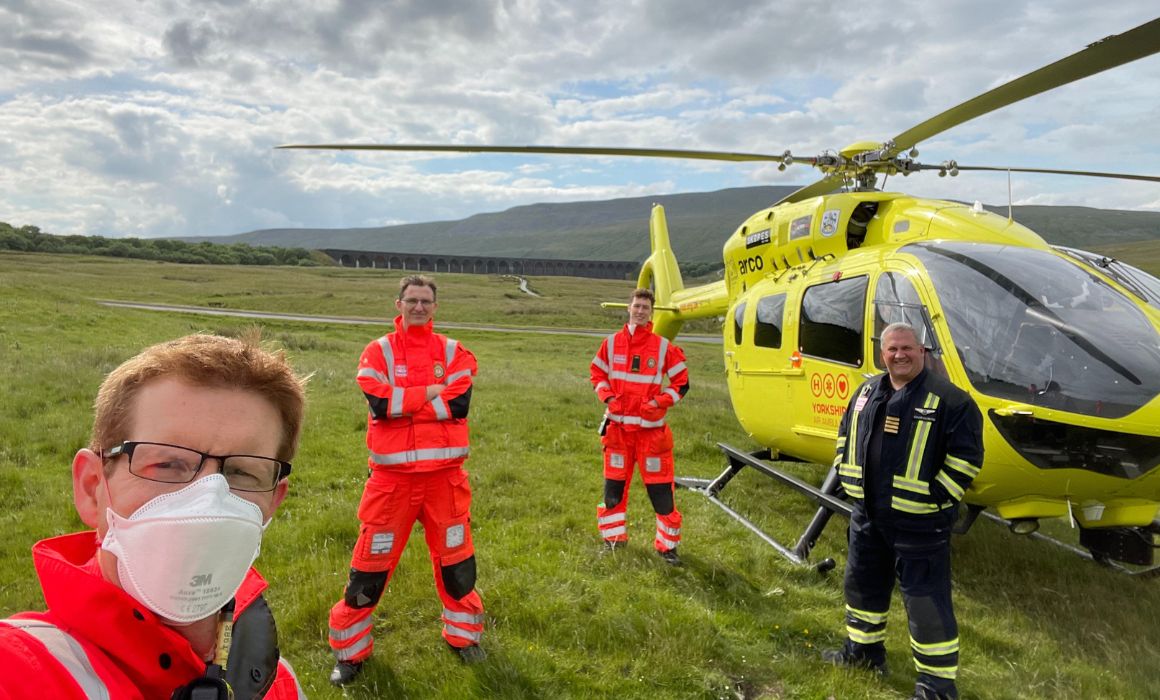
The team is very small on the helicopters, and working in remote locations can often mean we are working with just a Doctor, Paramedics, and assistance from the Pilot if the ground ambulance is unable to reach the scene. This can have its challenges when the patient needs multiple treatments delivering in a time-critical period. We are lucky that, despite this, we are able to invest in regular training at the base in the custom-built training suite to be prepared for such jobs.

In addition, treating patients while in flight can be difficult as our flight helmets reduce noise to such an extent that we cannot hear the patient, alarms on monitors or use a stethoscope to listen to the patient’s chest. We therefore aim to have fully treated the patient on the ground prior to loading them into the helicopter for a flight to hospital.

Can you describe a particularly challenging or memorable case you have worked on as an air ambulance doctor?

We attend lots of challenging and memorable jobs but perhaps the most challenging are those involving children – especially with having two children myself.

A particularly difficult case I can recall was when we attended a child who had been hit by a car. He was incredibly unwell, and it was a very emotional at the scene with his all his family and friends present.

He required emergency anaesthetic and a blood transfusion along with treatment for multiple limbs injuries.

By far the best part of this job and the job overall was meeting him and his family again afterwards when he visited us at our air base, especially seeing as that he had made such an amazing recovery.

How do you manage the stress and emotional toll of providing emergency medical care in high-pressure situations?

Although the situations were exposed to are challenging, we have trained for many years to try to ensure that the emotions on scene are kept under control to allow full focus on delivering emergency treatment.

This said we are all human and some jobs, especially those with poor outcomes for the patient, can be especially difficult when talking to relatives.

Outside of work I’m kept so busy with two young children who like outdoor adventures and I also enjoy going on long runs to clear my mind and keep fit!

How do you stay up to date with advancements in medical technology and procedures relevant to your role as an air ambulance doctor?

Part of being an air ambulance doctor involves staying up to date with, and pushing the boundaries of, the latest medical advances.

Most of the skills are learnt in the hospital setting through continual training in simulated environments. The key is deciding which of these advances can be adapted to use on the air ambulance and the speed of use, the size of the equipment in the aircraft and the benefit it brings to the patient that all needs to be considered.

What advice would you give to someone considering a career as an air ambulance doctor?

Go for it! The years of school, university and medical training are all worth it in the end – I promise!

The job is incredibly rewarding whilst also being very challenging. It gives a great sense of achievement to know that as a team we bring lifesaving and life changing to treatment to the people of Yorkshire. You never go to the same job or same area twice which gives huge variety to the job too.

We cannot thank Paul enough for taking the time to share his experiences with us.

His commitment to his patients and passion for his work is nothing short of inspirational, and we are grateful for the opportunity to highlight the crucial role that he and his colleagues play in keeping our region safe.

We wish Paul and the entire Yorkshire Air Ambulance team of doctors continued success in their lifesaving efforts and thank them for their service to us all.

Over 8,500 people across Yorkshire have received lifesaving care by the quick action of Yorkshire Air Ambulance service over the past 23 years. For further information or to donate today, please visit www.yaa.org.uk.


Angel in the Skies: A Tribute to Yorkshire Air Ambulance

This World Poetry Day, let us take a moment to appreciate the power of words and how they can be used to inspire and uplift us. Poetry has the unique ability to evoke emotions and transport us to another world. With that in mind, we present to you a poem that pays tribute to Yorkshire Air Ambulance.

May this poem serve as a reminder of the compassion, courage, and heroism displayed by our crew.


In the skies of Yorkshire so wide and free,

There’s an angel that flies with urgency,

Swift and true, with a vital mission to fulfill,

Yorkshire Air Ambulance, it’s the real deal.


Over the moors and hills so green,

To the valleys and cities in between,

It soars with a purpose, a life to save,

Braving the winds, it’s the hero we crave.


With skilled crew on board, they rush to aid,

The injured and sick, no matter the grade,

With compassion and courage, they do their best,

To ensure that every patient gets a fair test.


The helicopter lands, a life hangs in the air,

The team jumps into action, they don’t despair,

With deft hands and a heart that cares,

They tend to the wounds, healing without any flairs.


Yorkshire Air Ambulance, a beacon of hope,

A symbol of resilience that helps us cope,

With our fears and worries, as we watch it glide,

In the skies of Yorkshire, with courage and pride.


So, here’s to Yorkshire Air Ambulance, we raise our hands,

To the pilots, medics, and all the crew that understand,

The importance of saving lives, no matter what the cost,

Thank you for being there, when we need you the most.


Celebrating Air Ambulance Week 2022

Air Ambulance Week is an annual celebration of air ambulances and the work they do across the UK. This year falls between 5th and 12th September.

In the UK approximately 500 missions per week are carried out by air ambulance charities (Find out more here), providing rapid lifesaving support to people with life-threatening injuries or medical emergencies.

The YAA attend on average five incidents per day across both of our bases and last year, we responded to 1,700 incidents across the county and helped treat over 1,211 patients.

It costs £12,000 a day to keep both of our helicopters maintained and flying across Yorkshire, the equivalent of around £2,500 per mission.

This Air Ambulance Week we are calling on all of our supporters to help spread the word about our Charity, whether it’s sharing our social media posts or having a chat with friends, family or colleagues about what the service means to you and people in the region.

As an independent charity, the generosity of local communities, businesses and individuals enables us to continue saving lives. By helping us spread the word, you can really help us make a difference not only to our patients but to their affected loved ones too.

Find out how you can support us without costing you a penny HERE.

Find out how you can support us online HERE.

How to stay safe during a heatwave

This week is set to be the hottest in British history with temperatures across Yorkshire reaching nearly 40 degrees. Excessive heat can lead to a plethora of health issues including dehydration and heat stroke, especially if you are older or vulnerable. Below are just a few ways to stay safe in the current hot weather.

  • Drink plenty of water and avoid excess alcohol

Make sure you drink plenty of water throughout the day, aiming for between two and three litres. As much as we all like a little tipple in the sunshine, alcohol can be very dehydrating so try to limit this as much as you can and make sure you drink plenty of water in between drinks if you are planning on any alcohol consumption.

  • Avoid strenuous activity

Excessive heat can lead to exhaustion and dehydration so try to avoid strenuous activity when the temperatures are at their highest, usually between 11 am and 5 pm. Where possible, try to exercise in a cool, well-ventilated area indoors during a heatwave.

  • Be prepared when you travel

If you are planning on travelling during a heatwave, try to travel during the coolest times of the day and make sure you take plenty of water and sunscreen with you. Consider wearing a sunhat to give you additional shade and wear light, breathable clothing.

  • Check in on vulnerable people

Even though you may be tolerating the heat quite well, people who are older, children or those with certain health issues, particularly with the heart and lungs may be struggling. Keep an eye on your neighbours and children and ensure they all have plenty of water to hand.

  • Do not swim in open water

Although it may be tempting to cool off in a large pool of water, open water such as reservoirs, canals and even some coastal resorts can pose a risk of injury, or in severe cases, risk to life. Many contain hazards such as a strong undercurrents, uneven banks and riverbeds, weeds or hidden obstacles where a person may be trapped. For more water safety advice, please visit: https://www.rlss.org.uk/pages/category/open-water-safety-tips

Ways to support Yorkshire Air Ambulance that won’t cost you a penny

With rising energy bills and the cost of living increase, money is understandably tight for many people right now. If you’re looking to give to Yorkshire Air Ambulance, but you’re feeling a little bit cash strapped, below are a few ideas to help us with little or no cost.

  • Volunteer your time

One of the easiest ways to help us as a charity is by pledging your time and helping us with bucket collections, tin collections at local events or by hosting talks on our behalf. You can pledge as little or as much time as you can offer and all support is greatly appreciated. https://www.yorkshireairambulance.org.uk/volunteer-for-us/

  • Donate your unwanted clothing

If you’re having a clear-out, you can donate your unwanted clothing and shoes to our textile banks situated throughout the county. Working with our recycling partners, Recycling Solutions, the Yorkshire Air Ambulance receive an agreed percentage of the sale of the recycled materials. Good quality items which can be reused are sold to second-hand clothing traders in the UK and worldwide.https://www.yorkshireairambulance.org.uk/get-involved/recycling/

  • Shop with Give As You Live

Did you know that when you sign up to shop with Give as you Live and choose us as your selected charity, the retailers you shop with will make a donation to YAA for every purchase you make?

It’s completely free to use, and the funds raised help us to keep providing our vital life-saving service.

With over 6000 retailers participating in the scheme, you will be sure to find what you are looking for. Set up your Give as your Live account here.

  • Donate on your birthday or a special occasion

Do you have a birthday or special occasion coming up? Why not consider asking guests to give a donation to Yorkshire Air Ambulance in your name instead of a gift. https://www.yorkshireairambulance.org.uk/support-us/in-lieu/

  • Fundraise for us

You can plan many simple fundraising activities with little or no cost, such as a sponsored walk or run. We can help you with sponsorship forms and merchandise, all you need to do is take part.

https://www.yorkshireairambulance.org.uk/get-involved/fundraise-for-us/

  • Get social media savvy

Sharing is caring. If you are social media savvy and enjoy having a good scroll through Facebook, Twitter or Instagram, another easy way of supporting Yorkshire Air Ambulance is by sharing our posts with your friends and family.

  • Leave a donation in your will

Leaving a donation in your will is something that won’t financially affect you right now, but could help many of our patients in the future and protect Yorkshire Air Ambulance as a charity for many years to come.https://www.yorkshireairambulance.org.uk/support-us/wills-and-legacies/leaving-a-gift-in-your-will/


Meet our new Grants and Trusts Manager Marianne Haworth

Being able to apply to Grants and Trusts organisations is an integral part of YAA and contributes heavily to our vital running costs. They help us secure funding for specialist equipment, training support and facilities for our crew to deliver the very best patient care.

In May 2022, Marianne Haworth was appointed our new Grants and Trusts Manager. Marianne is responsible for applying to Grants and Trusts organisations on behalf of the charity and sourcing opportunities. We caught up with Marianne to learn all about her career history and what she aims to bring to the Charity.

Career history

“I was a full-time lawyer practising employment as an employment solicitor for six years. I then took some time off when I had my children before working with a Parish Council giving them legal and financial advice. That’s how I got into grant funding as I was applying for grants on behalf of the Parish Council. I then moved on to do grant funding for a school academy which had 13 primary schools, before leaving there to join the YAA.

Why did you want to work for YAA?

I have always lived in Yorkshire and have been drawn to the charity. I wanted to use the skills that I have acquired to be part of a team that is doing work for such a good cause.

What are you looking to bring to your role?

To increase contacts with a wider reach of charitable trusts and foundations. To get out there beyond Yorkshire, but also celebrate and nurture our Yorkshire relationships.

What are the current challenges to grant funding?

Due to the COVID-19 pandemic and economic instability, competition for grant funding has been fierce, with some business organisations prioritising grant funding over seeking loans or financing that needed to be repaid.  Trends and themes, such as climate change, food poverty are also continually changing meaning some causes lose out temporarily.

What kind of organisations gives grant funding to charities?

Any individual, business, group or other charity can establish their own foundation or charitable trust with powers to offer grants for general or specific charitable purposes.  Trust funding can be granted for general operational costs or restricted for a specific initiative or project.  At Yorkshire Air Ambulance we are extremely grateful to the donors who have supported us, and continue to do so, via grants.

What do you like doing in your spare time?

I like running, going to exercise classes and mountain biking when I can. I have three children, twins and an elder child.

Interesting fact

Marianne’s family like spending a lot of time outdoors and they have a holiday booked on a small island with no electricity later this year.


YAA championing female senior management positions

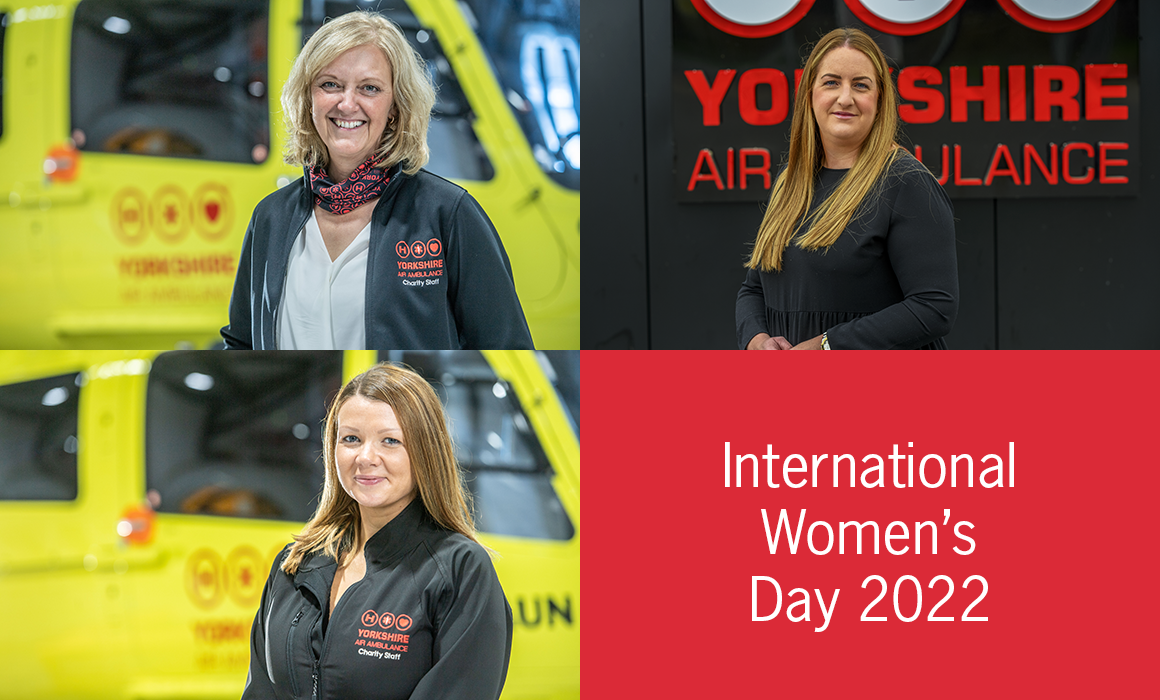
March 8th is International Women’s Day and today we’re celebrating the women in our Senior Management Team. Women are often underrepresented in workplaces, particularly when it comes to higher-level positions. However, as a Charity, we are proud to say that almost 70% of our Senior Management roles are taken by women.

We caught up with three of our Senior Management Team to hear their thoughts on being females in senior roles.

Abby Barmby is our Director of Marketing and Communications. Abby joined Yorkshire Air Ambulance in 2008 after previously working in advertising agencies and as a Marketing Manager for a construction company.

Speaking of her experience as a female in a senior role, Abby said: “I started with the YAA back in 2008 after being made redundant from my previous role.  I was only 24 at the time and my confidence took a real knock.  However, it was the best thing that could have ever happened to me as 14 years later here I am as Director of Marketing & Communications and an integral part of our Senior Management team.  I started off as Marketing & Communications Assistant and have worked hard over the years to grow and develop not only the team but for myself too.  I started as just a one-person team where I covered everything, to now having a team of four fabulous ladies, with individual specialisms who work alongside me every day.  I have had a lot of support, from both male and female mentors over the years as there is a real mix in most marketing industries.  However, it is great to see so many senior marketing positions being taken up by both males and females across the various industries.   Likewise, I’m proud to be part of a fantastic mixed-gender Senior Management Team – each one of us brings a different view or vision to the team and that’s what makes us so successful.  We appreciate and take the time to listen to each other which is key.  My message for anyone starting out in any industry is to use your initiative and be proactive!  We don’t see enough of that these days.  Prospective employers want to see candidates who are keen and willing and can think for themselves – don’t be afraid to stand out from the crowd and showcase your potential and the best of yourself.”

Helen Callear is our Director of Fundraising (North and East) and Kerry Dwyer is our Director of Fundraising (West and South). Jointly, they are responsible for overseeing fundraising teams, implementing fundraising strategies and making sure we’re reaching our fundraising targets.

Prior to joining the YAA in 2013, Helen ran her own timber agency working with European timber suppliers to the UK.  Kerry joined the charity in 2009 as one of our first Community Fundraisers and has a background in events coordination.

Speaking of her role and the fundraising industry, Helen said: “The role of a fundraiser can be done by anyone. The skills necessary are predominantly people, and relationship building skills, empathy, communication skills and multi-tasking, being highly organised and pretty tough (for when the rain is pelting down and you have only a gazebo for shelter!) Whilst there are great women in our fundraising team, we have three wonderful men who are extremely successful at what they do. We consider gender is irrelevant for fundraisers, it’s about being a warm and genuine person who can engage with donors on all levels.”

Kerry, commented: “Historically I do believe that there was a trend of a higher ratio of female fundraisers than males across the sector however I believe that has shifted now and there is a great diverse mix in the fundraising community, everyone bringing their own special set of skills to their roles and Charities that they are working for. That is certainly the case at the Yorkshire Air Ambulance.

“I am incredibly proud to be a director at the YAA, I feel privileged to work in a job that is actively providing such a fabulous service to the people of Yorkshire. I am part of a strong mixed-gender SMT and feel that the integration of people from different backgrounds and perspectives is what gives us our strength. If I had some advice to give to other women, with me coming from the era of shoulder pads and aggressive competitive one-upmanship, I would say, no that’s not the way! Women can use their influence in different ways to achieve their goals and have an impact, we don’t have to be like anyone, we just need to be ourselves and believe in ourselves and in the words of Viv Groskop we should lift as we climb”, said Helen.

Kerry added: “I feel extremely proud to be a director, as I am to work for the YAA. I started at the Charity over twelve years ago as a Community Fundraiser and have worked my way up to be in this position. We have had male Directors of Fundraising previously so it has been fantastic to step up into this position and bring my experience and skills to the role, leading our fundraising team and being part of Senior Management along with both my female and male colleagues. I certainly worked hard to earn this position though and suffered knockbacks along the way that just made me all the more determined.  I would hope that my situation would inspire others that this is very possible. It is a fact that still currently there are more male leaders in fundraising than females, although that gap is lessening. My message would be, have confidence in your ability, let your ambition and talent shine through and be clear about what you want- if you believe that you can get to that dream role, one day you will.”


What to do if our aircraft lands near you

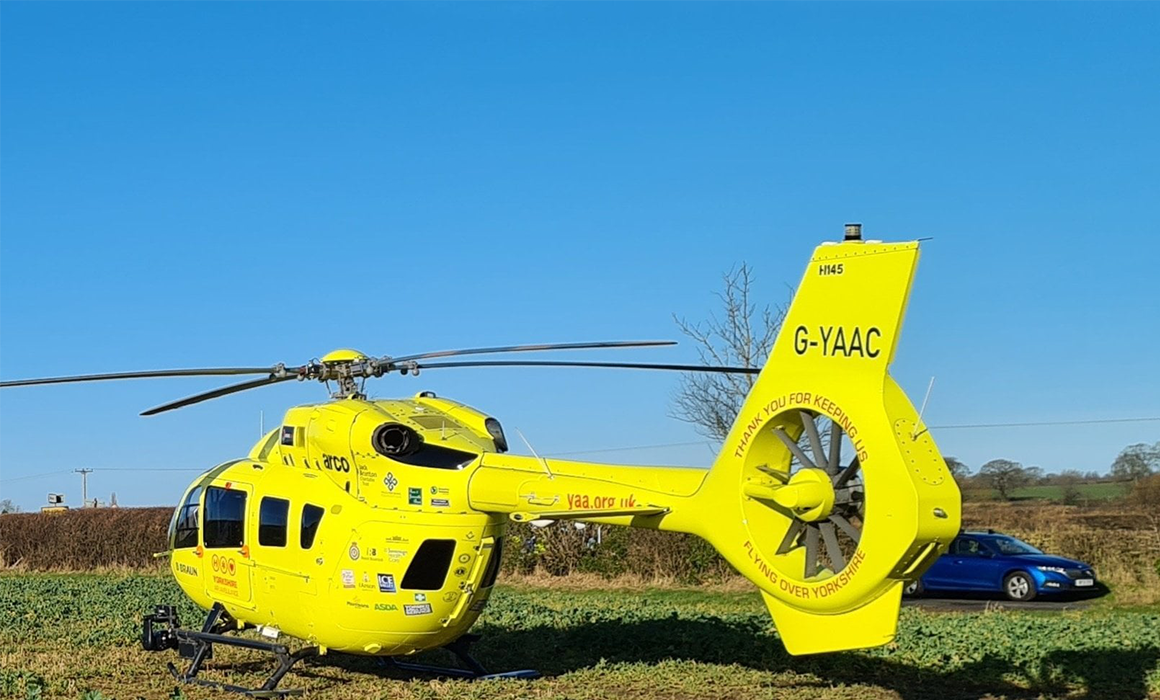
On average,  the Yorkshire Air Ambulance can attend up to five incidents a day in an array of locations up and down the county from rural North Yorkshire to the urban landscapes of Leeds and Sheffield.

It can be a very exciting experience seeing a helicopter hovering above, especially for children or those who haven’t seen one close-up before. When landing a helicopter there are a lot of considerations to take, especially when the general public could be at risk. If you see a helicopter trying to land near you, you can follow these simple steps below to stay safe:

Keep far back

Whilst it may be tempting to rush over to the aircraft, the best thing you can do is keep as far back as possible until the helicopter has landed. If you’re in a field, head over the outer perimeter and if you’re in an urban environment, stand as far back as you possibly can. The downdraft created by our blades is very powerful and could knock you off your feet.

Hold on to your belongings

Our helicopters can travel up to speeds of 160mph, which can generate quite a hefty downdraft when hovering above and coming into land. Make sure you keep hold of your belongings and keep your children or pets safe and close by. Don’t approach the helicopters until the blades have stopped turning and the engine has been switched off.

Allow the crew enough space and time to get to the emergency

Unless our visit is scheduled, our primary concern will be the welfare of our patients. Our Pilots stay with the aircraft to ensure its safety and will be more than happy to answer any questions you may have, but please give our crew plenty of time to vacate the aircraft and grab their medical equipment.

Be mindful of the photographs that you take

We love to see photographs of our helicopters and crew on the job – it’s a great way of helping us spread the word about our service. However, please be mindful of the photographs that you do take and ensure there are no patients in the background and that you’re not obstructing our crew from doing their jobs.


Christmas at the airbase

While many of us are winding down for the festive period and looking forward to putting on our ‘out of office’ emails, there are many emergency services and care services that are going about their week as business as usual, working every day of the Christmas holidays to ensure the nation is kept safe, healthy and well looked after.

This includes our Yorkshire Air Ambulance crew, as our service is operational 365 days a year looking after five million people across the four million acres of Yorkshire.

Last year the crew treated sixteen patients in between Christmas Eve and New Year’s Eve, including a cardiac arrest on Christmas Eve and a fall on Christmas day.

Speaking of what life is like at the base over Christmas, Acting Clinical Operations Manager Paul Holmes said: “The Christmas holidays is a busy time for many emergency services around the UK as people don’t stop being poorly just because it is Christmas. Because of the serious job we do, we often find that it is good for morale that we try to engage in in some festive activity during our downtime over the Christmas period.

We take it in turns to play our favourite Christmas tunes and if some of the crew have received an interesting or comical Christmas gift, they will bring it in to share with the team. We also try to contribute something towards a crew ‘Christmas dinner’ which is usually a buffet-style tea, but we always have to be mindful that as soon as the siren goes, it is business as usual and that job takes priority.”

A big thank you to all our crew working over the Christmas period and to all emergency services, carers, retail and hospitality workers also giving up their time this December to keep the nation running


YAA Staff celebrate Diwali

Each year, Yorkshire Air Ambulance responds to more than 1,300 incidents across the county and the charity provides a life-saving rapid response treatment for everyone, regardless of their age, gender or background.

According to the 2011 Census[i], Yorkshire is the most ethnically diverse region in England. Diwali, or Deepavali which is also known, is India’s biggest and most important festival of the year, celebrated by millions of people worldwide, including thousands of people across Yorkshire.

Diwali takes place annually and lasts for five days, marking the start of the Hindu New Year. The exact dates change each year and is determined by the position of the moon and usually falls between October and November.

Diwali isn’t just celebrated by Hindu’s, it is also celebrated by Sikhs, Jains and Buddhists. The form of the celebration will vary across India and around the world too. In today’s society, people from various backgrounds and cultures get together and celebrate Diwali with their friends, families and colleagues. The word Diwali (or Deepavali as it’s sometimes called) means “row of lights” in Sanskrit, which is an ancient language used and is still used in India.

During the festival, people decorate their homes with lights and oil lamps, called diyas. Diwali is a time filled with light and love; a time when Indians all over the world rejoice. It is the darkest night of the darkest period, yet it is a celebration of light!

Many families spend the festivities enjoying the company and sharing meals with friends and family, performing acts of Dana (charitable giving) and seva (selfless service), cleaning their homes and exchanging small gifts. Gifts are often sweets and dry fruits as well as other small but meaningful presents.

To learn more about the festival which is celebrated by many of our donors and patients, one of our West Yorkshire Community Fundraisers, Angela Vyas, who will be celebrating Diwali this year with her friends and family, put together a small presentation for staff.  Alongside this, Walk the Plant, a National Portfolio of Arts Council England, who have successfully organised Diwali events across the North West, kindly provided lantern kits for the staff to get involved in the festivities and produce their own Diwali lanterns.

Each lantern has been hand decorated by our fundraising, administrative and marketing staff in their spare time to learn the meaning of Diwali.

Angela said: “This project has been a great chance for us to celebrate the diversity across our region and learn more about our supporters and their religions such as the Bradford and Leeds Gurdwaras who have been incredibly supportive for our charity and have provided vital assistance for our Building Bridges campaign which aims to celebrate diversity, encourage integration and help break down barriers, whilst increasing understanding and develop long-lasting partnerships with communities across the region. It was also a fantastic opportunity for me to share one of the main festivals that I celebrate each year and to show my colleagues how much it means to me and many people across Yorkshire.”

[i] https://www.ethnicity-facts-figures.service.gov.uk/uk-population-by-ethnicity/national-and-regional-populations/regional-ethnic-diversity/latest


The dangers of pointing lasers at helicopters

Over the last few months, we have noticed a rise in laser attacks towards not only our aircraft but many air ambulances across the country. Pointing a laser at a helicopter can cause great danger not only to our crew by temporarily causing blindness and headaches during pivotal parts of a flight, but our patients whose trip to the hospital could be lengthened should we need to divert, along with civilians too if our aircraft crashed in a public place.

Owen McTeggart, Yorkshire Air Ambulance Chief Pilot, said: “If we get a laser attack while trying to land at a HEMS site, it means we cannot land and the injured person on the ground doesn’t get the care that we are there to provide.

It doesn’t take much for the eyes to be permanently damaged by a laser and while the laser itself might not be a danger if it doesn’t make contact with the eyes, it is a massive distraction for the crew during a critical stage of flight”, he continued.

A law passed in 2016 made it illegal for a shining light to be pointed towards an aircraft in flight.  The law states that a person must not in the United Kingdom direct or shine any light at any aircraft in flight so as to dazzle or distract the pilot of the aircraft.’ A successful prosecution could lead to jail time or a hefty fine or in some cases, both.

Unfortunately, laser pens are very easy to access and buy, and not many people are aware of the dangers they may cause.

“A lot of it is ignorance of the implications to our operations. And I’m sure most people that point a laser at a helicopter think it’s just a laugh and no harm is caused. But it can in some cases have life-changing consequences for the pilot, the crew and if it’s an air ambulance, the patient in the back they are trying to save.”