'Summat in t'Air' PODCAST FINAL EPISODE - OUT NOW!
LISTEN HERE

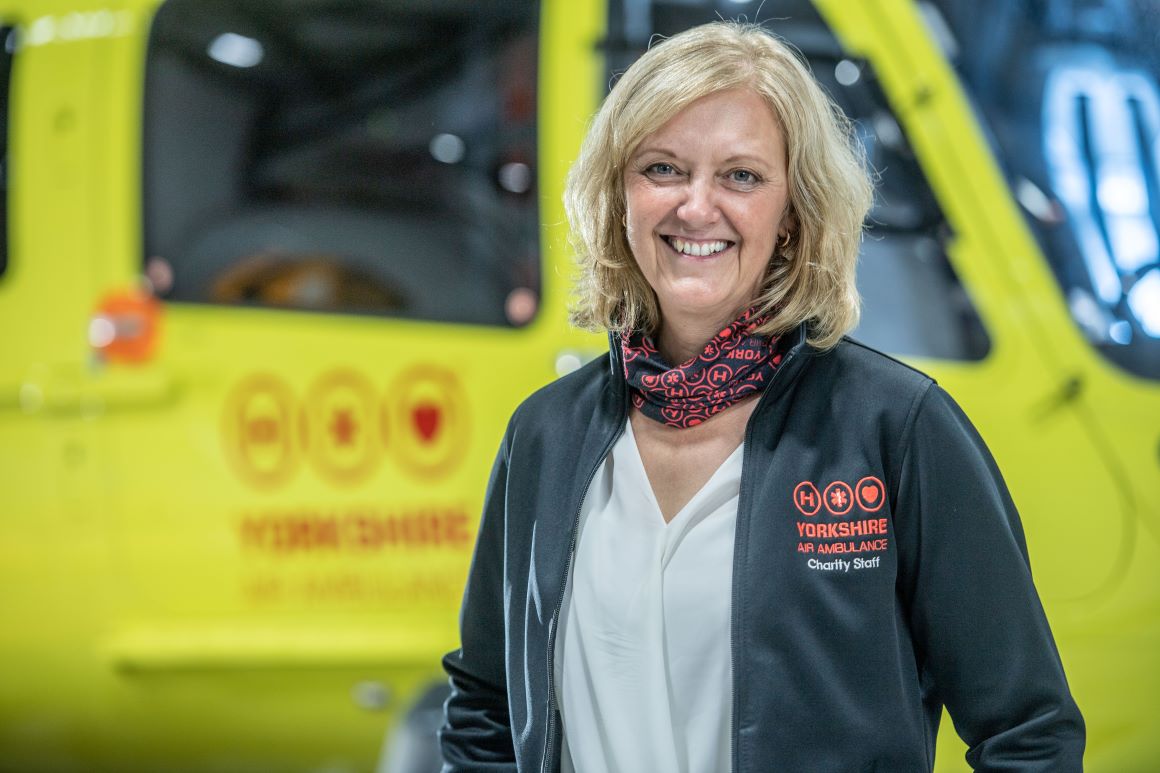
Musings from our Fundraising Director (North and East), Helen Callear

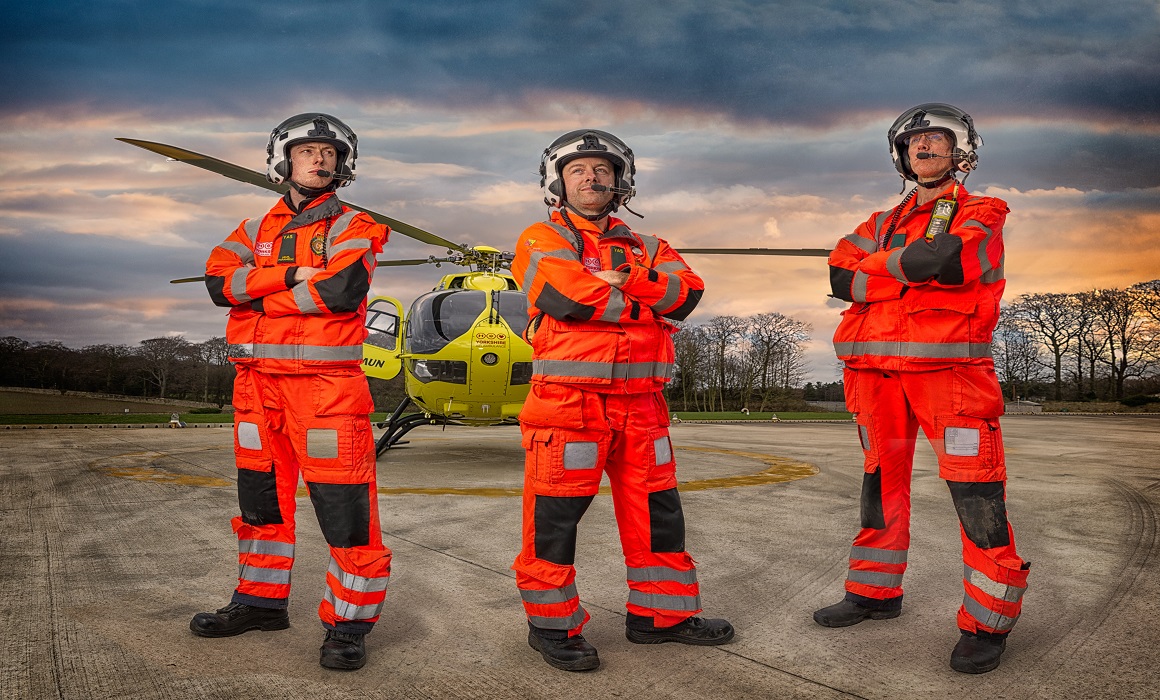
Today we’ve been viewing first drafts of new videos which we recently had made of our crews in action. The content is to refresh our current suite of videos and for our new sponsored promotional vehicles which are nearly ready to roll. I am again, as always blown away by the skill and commitment of the crew. Their professionalism in the face of so much stress, sometimes horror, and nowadays, also risk, is difficult to grasp for someone like me. Every day our doctors, paramedics and pilots face life changing situations in circumstances sometimes outside of their control, and yet they remain calm and focussed and people end up owing their lives to that courage under pressure.

It’s a far cry from talks, presentations, spreadsheets, gazebos and bucket collections. But as fundraisers, that is what we do and we gape in awe at the bravery of the crew-and sell some more key rings. Fundraisers know that their job is to get their heads down and follow the money. We know that we are not at the sharp end. We are fully aware that we are not for the TV screens or the limelight. We work in small groups, engaging with our generous donors with their own individual stories, with volunteers who give their time so freely and represent us so passionately. We feel proud to be part of the fabulous team that is the Yorkshire Air Ambulance and humbled by the small significance of our role, as a small facilitating cog in the big wheel which does such important life-saving work.

Then the day came when one of our paramedics said to me, when we were having such a conversation about what valuable and life extending work they do, that the crew would not be able to do anything if it were not for the fundraising team. I laughed a bit, awkwardly at the joke, but it stopped me in my tracks and did occur to me that actually it’s the partnership which is the key. The donors make it possible for the air ambulance to operate, the fundraisers and volunteers provide the conduit to this small quiet miracle and it is this hand to hand chain of events which makes such crucial work possible. It helped me to foster a kind of pride of my own team, at the strength of the colleagues we have in the role of income generation, and it makes the early starts, the long days, the chilblains and the brainstorming zoom meetings all worth it to make these two polar opposites of the service attract and come together with such miraculous results.

Steve Waudby’s last flight for the YAA

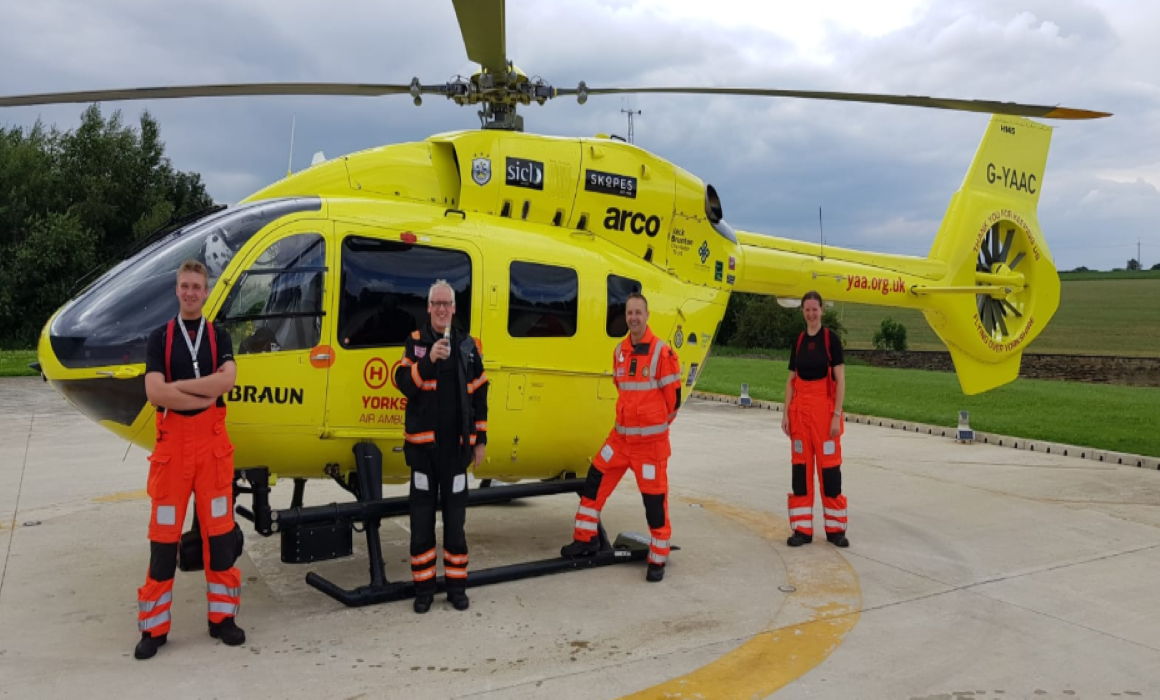
Happy 60th Birthday to our pilot Steve. Waudby. As Steve turns 60 this week unfortunately he is no longer able to fly our helicopters due to UK flying legislation.

Steve’s passion for flying started at a mere age of 13, when he joined the Air Training Corps (air cadets).  He went solo in a glider at age 15, became a gliding instructor at age 16, and at age 20 won a Royal Air Force flying scholarship, where he obtained his Private Pilot’s license.

He joined the RAF in 1983 and worked his way up to Squadron Leader, qualifying as a flying instructor and later becoming the senior helicopter instructional standards examiner.  Throughout his 22 years of service, he has flown all over the world including Northern Ireland, Bosnia, Bangladesh and Hong Kong.

Steve has flown periodically for the Yorkshire Air Ambulance over the last eight years in a freelance capacity, returning full time in August 2018.

According to military tradition, pilots are not supposed to know the exact date of their last flight. Therefore Chief Pilot Owen McTeggart organised a special one off call so that the crew could celebrate Steve’s momentous occasion in style.

Owen McTeggart, YAA Chief Pilot said: “In the military, we used to actively avoid letting a pilot have ‘a last flight’, or at least letting them know it was the last flight, until they had landed.”

On Friday afternoon the plan was to dispatch Steve and the crew to an unknown mission and then promptly ‘stand them down’ and turn the helicopter back to base to be greeted by a few members of the Senior Management Team including the charity’s chairman Peter Sunderland, for a ‘socially distance’ thank you for his many years of duty

However! No plan is fool proof. And almost exactly at the same time we planned to send Steve away on his fictional task, a real task came into the Airdesk, with Steve and the rest of Helimed 98 dashing off to ‘save a life’. As with all things in HEMS, no one knows how long the task will take and Peter with the rest of the senior management team had to leave due to other commitment and arranged to meet up with Steve at a later date. Steve still got his traditional soaking with sparkling wine (non-alcoholic of course) as Paramedic Kit von Mickwitz dashed across to the supermarket while the rest of the crew prepared the aircraft for the return to base.

Steve also had something else to celebrate upon returning to base. On this flight, Steve achieved his 8,760 hours of flying, which equates to a year in the air, a very big milestone for pilots.

Thankfully we’re not saying goodbye to Steve, we are happy to report that he will continue working for the YAA as our Director of Aviation.

Thank you for your many hours of duty Steve and here’s to many more hours supporting our wonderful charity on the ground!

Behind the scenes of Helicopter ER

Helicopter ER is now in its fifth series, providing an insight into the vital work of the YAA and accompanying the crew on all of our life-saving missions. Keeping the camera rolling on board the air ambulance is York based Production Company, Air TV.

We caught up with Holly Pywell, Production Manager at Air TV to see what it’s like working behind the scenes on our hit TV show.

What training do you need to have to accompany our aircrew?

Anyone who films on board the air ambulance has to undergo the same aviation training as the HEMS paramedics to become a Technical Crew Member (TCM). Technical Crew Members are trained to refuel and operate navigational systems on board the aircraft so that if all the crew are required to deal with a medical emergency, our camera operators can jump in the front left hand seat and assist the pilot. All aircrew camera operators are subject to a regular line check with the pilot to refresh our knowledge, much like the paramedics on board.

How do you get consent to film patients at the scene of an incident?

As soon as we arrive on scene, and if it’s appropriate (dependent on what condition the patient is in) we will try to let the patient know what we are doing and ask them if it’s okay to continue filming. We will then record their name and contact details, often speaking to any relatives or friends who are on scene. Weeks later when the patients are hopefully feeling better, we will contact them again and arrange to visit them to talk about the programme and ask for their written and fully informed consent to feature on the show. Depending on how fit the patient is and whether they are emotionally capable of making the decision, it can sometimes be a number of years until the incident is on TV.

What do you have to consider when filming an incident?

We need to consider how different people may interpret the footage and how distressing a particular incident may be for the patient, their families and our viewers. We don’t want to upset any of the patients, and it’s vital our filming doesn’t hinder or delay the work of the air ambulance crew in any way. We are very aware that the work of the doctors, paramedics and pilots is far more important than a television show.

What are the hardest incidents to film?

The hardest incidents will depend on who’s filming and how they can relate to the incident. They are often harder if you can relate to being in that situation. For example, if you have children of your own and you’re filming an incident involving a child. If we got upset by every job we to go to, same as a Paramedic, we wouldn’t be able to do our jobs.  When we attend particularly upsetting incidents, we debrief with the crew and we talk about it.  It’s important to recognise when something has affected you. I’m the mental health first aider at Air TV and we are also trained in dealing with trauma.

Are the majority of people happy to be filmed?

The majority of people we film are happy to appear on the TV show. Usually if they don’t want to be filmed we are told on the day. Most people see it as a great way of supporting the Charity – they know their story can contribute to helping the YAA publicise just how important the work they do is.

How much work goes into a patient’s story?

There are so many hours that go into creating just one patient story and making sure that the patient is happy with the final product. From the day we film the incident, there will be lots of hours talking to the patient, meeting the patient and checking to see if they are happy for the clip to be featured. Once they give consent, the footage goes into the initial editing phase, then the online edit and then through to compliance checking. During the compliance process, we will go through every frame, watching each patient’s clip several times and taking their feedback on board. The patient will always be at the forefront of our minds throughout the editing process, and we always put their thoughts and feelings first.

What’s the best bit about working at Air TV?

I love flying in the helicopters. When I was sixteen Helicopter Heroes (the programme before Helicopter ER) was my favourite programme and I would tune into the BBC at 9.15am to watch it. When Air TV found me through work experience, I was so happy to be working on one of my favourite programmes.

It’s also great to be working on a show that has a real benefit in raising the profile of air ambulance charities in the UK and in turn helps to keep them flying.

For me, it’s a dream come true to be flying with some of the best doctors and paramedics in the UK.

Helicopter ER is on Channel Really at 9PM every Monday, to catch up on any missed episodes please visit: https://www.discoveryplus.com/gb/show/helicopter-er

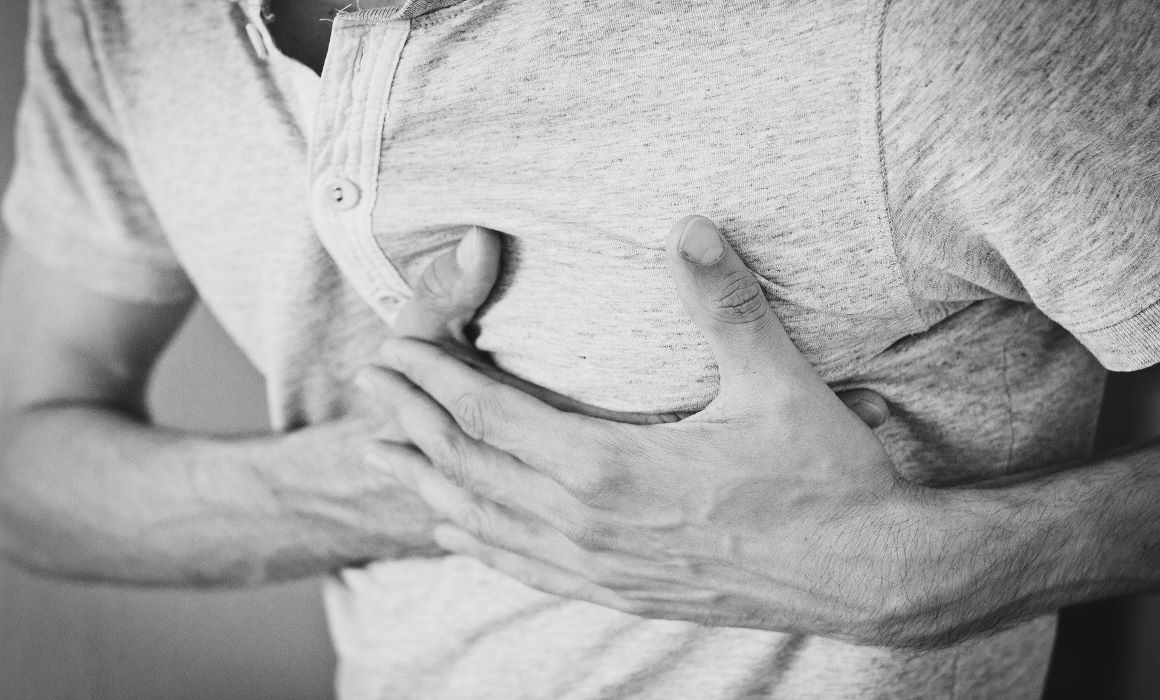
Do you know the difference between a cardiac arrest and a heart attack?

There is a common misconception that cardiac arrests and heart attacks are both the same. Whilst both of them involve the heart, they both have very different symptoms and can possibly have two very different outcomes for a patient.

When call handlers ring 999, the words cardiac arrest and heart attacks are often used interchangeably. However, it’s important to know the difference because both are emergencies and time is critical.


What is a cardiac arrest?

A cardiac arrest is where the heart suddenly stops pumping blood around the body, resulting in unconsciousness and the patient stopping breathing or the patients breathing looking abnormal.


What are the symptoms of a cardiac arrest?

  • Loss of consciousness
  • Not breathing normally
  • Unresponsive


Next steps

If you suspect that someone is having a cardiac arrest, call 999 and start immediate CPR – if treatment is started early, cardiac arrests can be reversible.

You should ask bystanders if they are able to find a defibrillator – these can often be found in public places such as schools, offices, transport stations and shopping centres. Heartsafe have put together a handy list of registered defibrillators in the UK: https://www.heartsafe.org.uk/


What is a heart attack?

A heart attack, also known as a myocardial infarction or MI is where the blood supply to the heart is suddenly blocked.

What are the symptoms of a heart attack?

  • Chest pain – a sensation of pressure, tightness or squeezing in the centre of your chest
  • Pain in other parts of your body, particularly from your chest to your arms and throat
  • Feeling dizzy and lightheaded
  • Sweating
  • Shortness of breath
  • Feeling sick or being sick
  • Feelings of anxiety or impending doom
  • Coughing or wheezing


Next steps

If you suspect someone is having a heart attack call 999. Whilst waiting for emergency services to arrive, it may help to chew a 300MG tablet of aspirin, as long as the patient isn’t allergic.  Aspirin helps to thin your blood and improve blood flow to your heart.

Every minute counts when someone is experiencing cardiac problems – act fast and help save a life.


Behind the scenes: a look at our Simulation Suite

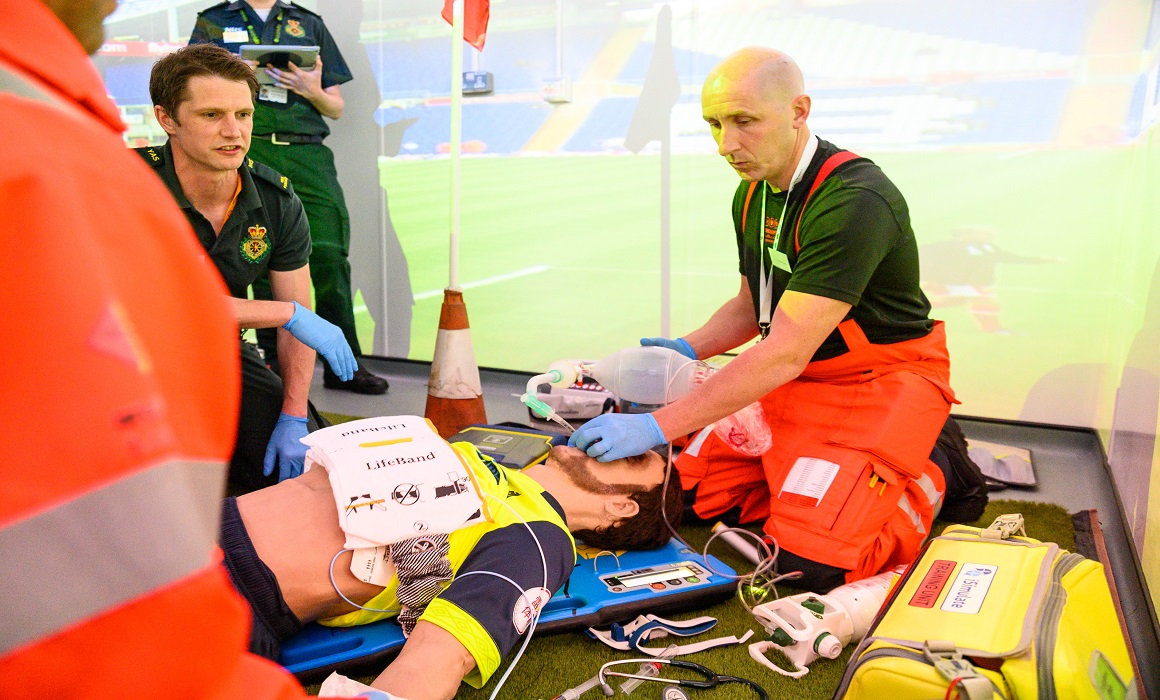
In June 2019, we officially opened our state-of-the-art Simulation Suite situated at our Nostell airbase.

The suite is a fully immersive training room that can be adapted to replicate various real-life trauma situations.  It features 270-degree projectable walls, a scent dispersal machine and is temperature controlled. The simulation suite not only tests our paramedics’ clinical skills, but it also tests their sensory system, similarly to what would happen on a call out. The suite also features a family of manikins, known as Simbodies, which are life casts of cadavers to give them the look and feel of a real person. The elderly manikin Vivien was specially made for the Yorkshire Air Ambulance, casted from a woman still alive and living in London today.

Simbodies have movable joints and limbs and are anatomically correct with airways and nostrils and skin suitable for needle decompression. The manikins come with specialist moulage kits, which are sleeves with common injuries such as fractures and burns that can be attached to the manikin for the paramedics to train on.

Matt Syrat, Clinical Operations Manager for the YAA, said: “When practising procedures on our life-like Simbodies, it gives you the sense that you are working on a real life person and can evoke some of the emotional feelings to what you may feel on a real job.”

He continued: “The Simbodies also enable us to practice complex procedures that the older style manikins weren’t capable of.”

Simulation training exercises take place several times a week, demand permitting, with a facilitator observing from a control room. Exercises are selected using ‘Simcards’ designed by our paramedics based on call-outs they have attended previously to add realism to the simulation.

After each training session, the crew will debrief and discuss the exercise in detail and what could be improved. “The Simulation exercises are not an assessment. It is peer support from colleagues with an equal skillset and experience, making sure we all have the same training”, said Matt.

Not only does the simulation suite test our crews current skills, it also enables them to practice new industry techniques and technology in a safe environment to see how they would perform on a job. The Simulation Suite has been particularly useful testing the skills of the latest HEMS recruits to encourage the development of their skills and ensure they have the same level of training as the current HEMS paramedics

According to Paramedic personal reflection reports, more than three quarters (85%) of our HEMS paramedics have noted improvements in their confidence from using the Simulation Suite, as well as increased muscle memory, which has enabled them to recall procedures quicker.

Since opening the suite six months ago, specialist teams across Yorkshire such as HART (Hazardous Area Response Team) and RAT (Red Arrest Team) have both had access to the facilities allowing our HEMS paramedics the opportunity to facilitate the training for them and share their critical care experiences in the process.

“By opening our simulation suite to more specialised groups, we are able to ensure the clinical exposure they get is highly tested at the same level as their job demands of them”, said Matt.

Speaking of the future, Matt said: “In a few years down the line, we would like to open the facility to more specialist teams such as the Police fire arms teams along with specialist Fire and Rescue teams.”

He continued: “The Sim Suite has already proven to be life changing for us in terms of our training.”

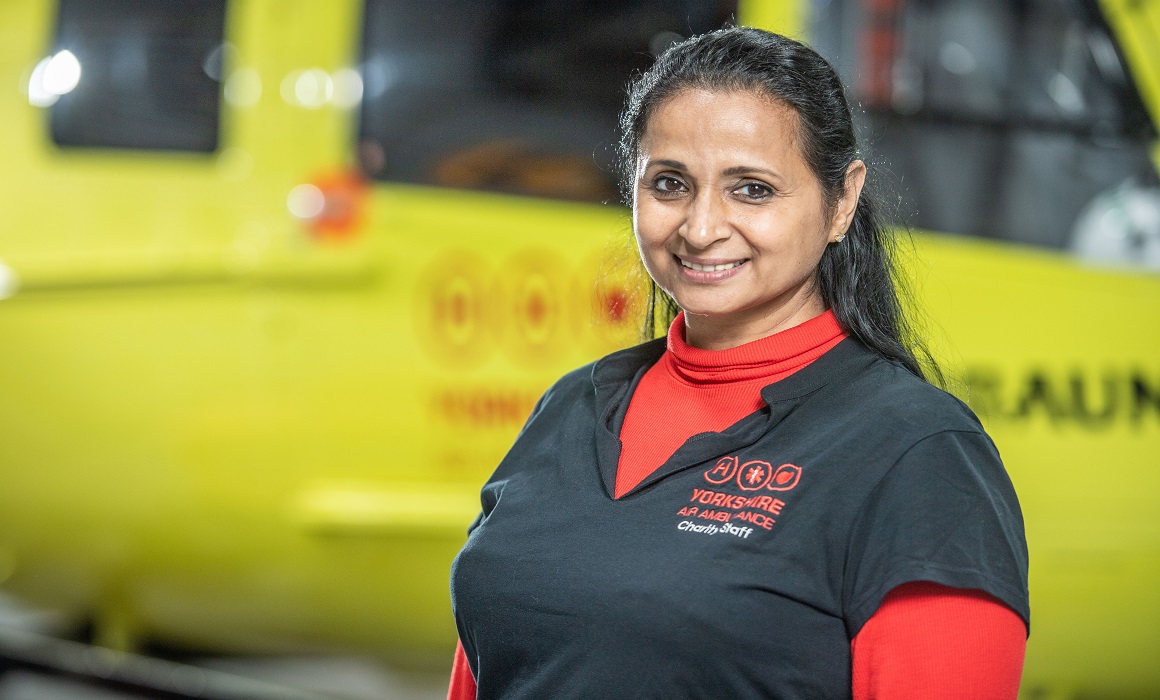
Meet Angela

We caught up with one of West Yorkshire Community Fundraisers, Angela Vyas to discuss what it’s like working for the Yorkshire Air Ambulance and to see what a typical day for a YAA fundraiser looks like.


Tell us a bit about yourself…

My name is Angela Vyas and I’m a Community Fundraiser for West Yorkshire. I live in Chadderton, which is technically in Lancashire, but I live close to the motorway, so it’s very easy to cross the border and travel around Yorkshire. I’m married and I live with my husband who’s a Hindu priest.

As part of my role, I cover the whole of West Yorkshire booking in and managing in store promotions in  garden centres, medical centres and supermarkets such as the Tesco Blue Token Scheme and ASDA Green Living. I also work with various community groups to spread the word about our charity.


Why did you decide to work for the Yorkshire Air Ambulance?

I started my career in education and then went into self-employment for 15 years, where I ran my own complementary health magazine. I loved and adored my job, but everything was going digital and it was something that I wasn’t passionate about, so I wanted to leave on a high and start a new challenge.

The charity sector appealed to me because of the charity work I do voluntary for the Indian Association Oldham and because I enjoy networking and making money for good causes. It’s great waking up every day knowing that you’re making a difference.


What does your typical day look like?

There’s no typical day for a fundraiser, every day is different.  For example, this morning I’m in the office to pick up some merchandise and then later I’m going to set up a stall at a local beer festival, hosting a stall at a local bus station and then I’m going to Brighouse for a cheque presentation.

One day I could be at a stall in a supermarket and the next day at a gala or fete. No two days are ever the same and that’s what keeps my job exciting.

When you have the time to be at your desk, you can start planning. I plan very well in advance. It’s a challenge, looking at different areas and different aspects that will raise the charity’s profile, but it’s something I really enjoy doing.


What do you enjoy about your job?

The variety, being able to network and being able to raise the profile of such an important cause. I also enjoy going to events that I would have never heard about such as Jazz festivals.

It also gives me a lot of job satisfaction when someone comes up to you and tells you that the Yorkshire Air Ambulance has saved their life or the life of someone they know. It’s great knowing that by working for the YAA, that you’re making a difference.


What is your most memorable aspect of the charity so far?

One of my most memorable moments was a phone call from the Bishop Konstant Catholic Academy Trust schools in Wakefield. They had chosen us as their Charity of the Year and wanted to raise £12,000 for us, but ended up raising £16,000. When they called up to tell me, we were both crying with happiness. It’s amazing to see smaller groups achieving fundraising success and I love getting involved and building those relationships.


Hinduism is a major part of your personal life, has this helped with networking and building relationships as a fundraiser?

One of my personal goals is to work with more ethnic communities and networks.  We want to show that the Yorkshire Air Ambulance caters for all faiths. I’ve been using my faith to appeal to wider community groups as I’m able to speak Hindi, I’m familiar with different languages and able to converse in Punjabi. This helps when delivering talks in places such as temples or mosques.

We have such a diverse culture in the UK and we’re here for everybody regardless of their religion.


What would you say to others looking to become a fundraiser

I would say, don’t think its 9-5, because it certainly isn’t a 9-5 job. You can switch off, but the more you give, the more you get back. You need a passion to get out into the community, network with other groups and not be afraid to try new ideas. Sometimes new ideas don’t always work, but you can learn from them. Fundraising is always changing and we’re always looking for innovative, future proof ideas.
Six ways you can support the YAA Online

It costs £12,000 a day to keep our helicopters maintained and in the air and right now, in this time of uncertainty, we need your support more than ever before.

If you are able and willing to, below are six ways you can support the YAA without leaving the comfort of your home, from setting up online fundraisers, to simply spreading the word about our services:

Spread the word

We understand that not everyone has money that they are able to donate right now. One of the most valuable gifts you can give us as a charity is helping spread the word about the work we do, whether it’s by sharing one of our social media posts or creating your own!

Play our YAA Lottery

One of the easiest ways to support us is by playing our lottery. Not only will you be helping save lives across our region, but you could also be in with the chance of winning over £600!

Find out more about the YAA Lottery and play online here.

Set up a regular donation

Regular donations are the life-blood of our charity. They enable us to plan for the future and gives us a consistent income stream, which helps keep both of our helicopters in the air. You can pledge as little or as much as you like, every donation is appreciated.

Find out more about how regular donations help YAA and set up your donation here.

Make a donation in lieu of an occasion

Give the gift that keeps on giving by considering making a donation in lieu of someone’s birthday, wedding or special occasion. This is a great choice for loved ones in your life who you are struggling to buy for. In return for your donation, we will pop a celebratory message on our board so you can show them how much you care!

Make a donation in lieu here.

Shop using Amazon Smile, or choose us as your preferred eBay charity

Amazon Smile and eBay both have affiliate schemes which donate a percentage of the money you have spent back to your preferred charity, at no extra cost to you! To do this, simply register with Amazon Smile or select us as your favourite charity on eBay at the checkout.

Setting up an online fundraiser

Looking for something to do to help pass the time away? Why not get creative and set up an online fundraiser. Challenge yourself and others in your household to run a balcony marathon or cycle on your previously abandoned exercise bike. If you have a skill, why not consider hosting live sessions on social media. The possibilities are endless!

Find out more about online fundraising for YAA here.

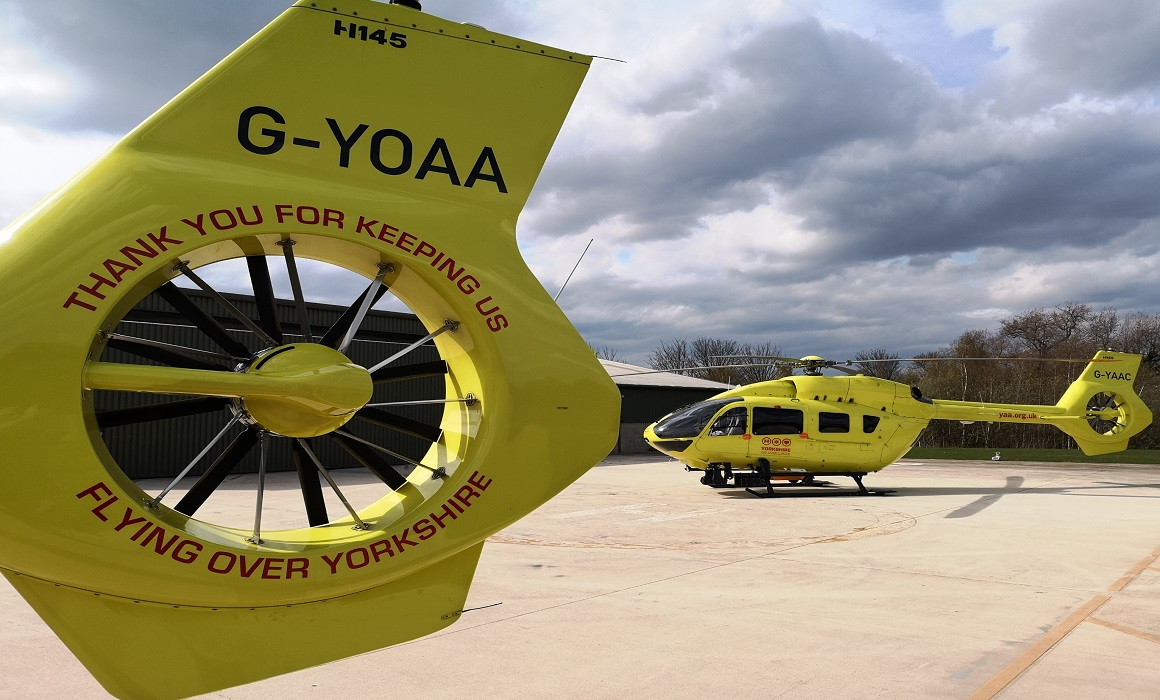
Your support means a great deal to us and the lives you help save across the region. Thank you for helping to keep us flying over Yorkshire!

Welcome to our new blog!

Welcome to our brand new Yorkshire Air Ambulance blog! Here you’ll be able to learn more about what goes on behind the scenes at our charity from the latest operational developments to Q&A sessions with our staff and crew.

We hope that you will join us on our new journey as we have lots of posts that we can’t wait to share with you, so make sure you bookmark page and visit us again soon!