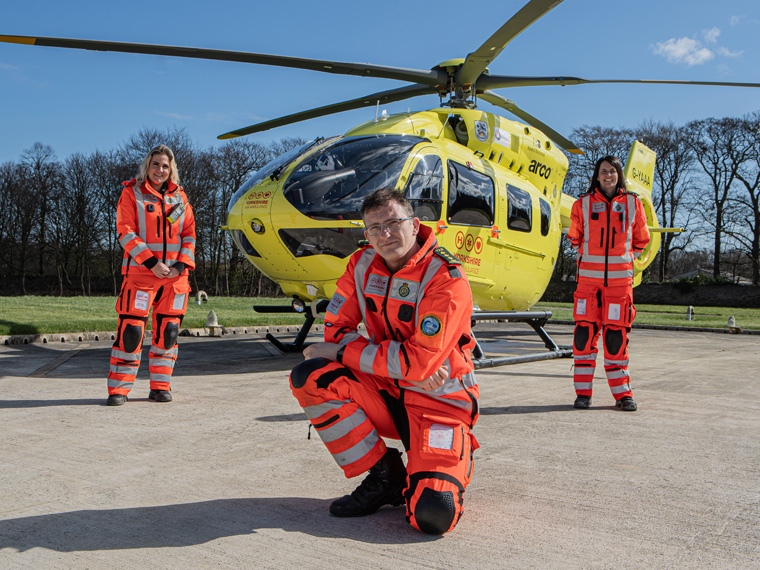

This International Women’s Day feels especially meaningful to me.
by Kathryn Marsden OBE, Yorkshire Air Ambulance CEO (as of 9th March 2026)
The day after, I will begin my role as Chief Executive of Yorkshire Air Ambulance Charity – an organisation that quite literally saves lives every single day. As I prepare to step into this extraordinary role, I find myself reflecting not only on leadership, but on the journey that brings many women into positions of responsibility across health, social care, charitable organisations and emergency services.
My career did not begin in a leadership office. It began on the frontline as a care assistant. From the very start, I was driven by a simple but powerful motivation: to make a positive difference to people’s lives, particularly at moments when they need support the most.
Over the years, I have worked across social care, disability services, dementia support, local government and national charities – always rooted in service delivery and impact. That journey, from frontline roles through to national leadership, has shaped how I lead today: with accessibility, authenticity and a deep respect for the people delivering vital services every day.
International Women’s Day gives us an important opportunity to recognise that while women make up the majority of the workforce in health, charity, social care and many public service roles, they are still underrepresented in senior leadership positions – particularly in high-profile and emergency service environments.
And yet, these are precisely the sectors where diverse, compassionate and resilient leadership matters most.
Leadership in life-saving and life-changing services is different. It is not about status or hierarchy. It is about responsibility. It is about making decisions that affect people at their most vulnerable moments and supporting teams who operate under immense pressure with professionalism, courage and care.
Throughout my career, I have led organisations through financial challenge, strategic transformation and sector-wide change. I have worked closely with frontline teams, volunteers, policymakers and people with lived experience. What I have consistently seen is that the strongest organisations are those where leadership is grounded in values, collaboration and purpose.
Women often bring a leadership style that is highly aligned with these environments – one that is inclusive, empathetic, pragmatic and focused on long-term impact. These are not “soft” qualities. In complex, high-stakes services, they are essential.
As I prepare to join Yorkshire Air Ambulance Charity, I am incredibly aware of the skill, dedication and expertise of the clinicians, pilots, charity staff and volunteers who make the service possible. Emergency services require decisive leadership, but also trust, clarity and an unwavering focus on mission. Lives depend on it.
I am also conscious of the importance of visibility. When women step into senior leadership roles within emergency and public service organisations, it sends a powerful signal – particularly to younger women considering careers in these sectors – that leadership is not defined by a single pathway or background.
My own path has been shaped by starting on the frontline, working my way through operational and strategic roles, and leading national organisations through significant change. That experience has reinforced my belief that effective leadership is not about being the loudest voice in the room, but about listening, engaging and bringing people with you.
International Women’s Day is also a moment to acknowledge the extraordinary contribution of women across health, social care, charity and emergency services. Every day, women are leading teams, delivering care, responding to emergencies, supporting families and strengthening communities – often without recognition, and always with commitment.
The challenges facing our sectors are significant: increasing demand, workforce pressures, financial constraints and growing complexity of need. Meeting these challenges will require bold, compassionate and innovative leadership. It will also require organisations to continue creating inclusive cultures where diverse leadership can thrive.
For me, stepping into the role of Chief Executive at Yorkshire Air Ambulance Charity is both a privilege and a responsibility. I am excited to lead an organisation with such a strong reputation, an inspiring mission and a profound impact across the region.
This International Women’s Day, my reflection is simple: leadership is at its best when it is rooted in purpose, service and humanity.
If my journey shows anything, it is that leadership does not require a traditional starting point. It can begin on the frontline. It can be shaped by lived experience. And it can grow through a genuine commitment to improving lives.
As I look ahead to this next chapter, I do so with gratitude for the women who have led, mentored and inspired me throughout my career – and with determination to play my part in supporting the next generation of female leaders in life-saving and life-changing services.
Because when leadership reflects the values of compassion, courage and service, the impact reaches far beyond any single organisation. It reaches into the communities we serve – and, ultimately, into the lives we help save.