
The latest episode of Yorkshire Air 999, airing on Really and discovery+ this Friday 10th October at 9PM, follows the Yorkshire Air Ambulance (YAA) team as they respond to a man who suffered a life-threatening leg injury in the South Yorkshire village of Hellaby, near Rotherham.
67-year-old Paul Milroy was helping to remove a tree stump in his son’s garden when the circular saw he was using suddenly jammed. The spinning blade recoiled, cutting deep into his leg and slicing through both the tibia and fibula, leaving it severely damaged and bleeding heavily. Acting quickly, Paul’s son grabbed a dressing gown belt and tied it tightly around his father’s leg as a makeshift tourniquet, a decision that would ultimately prove lifesaving, before calling 999 for help.
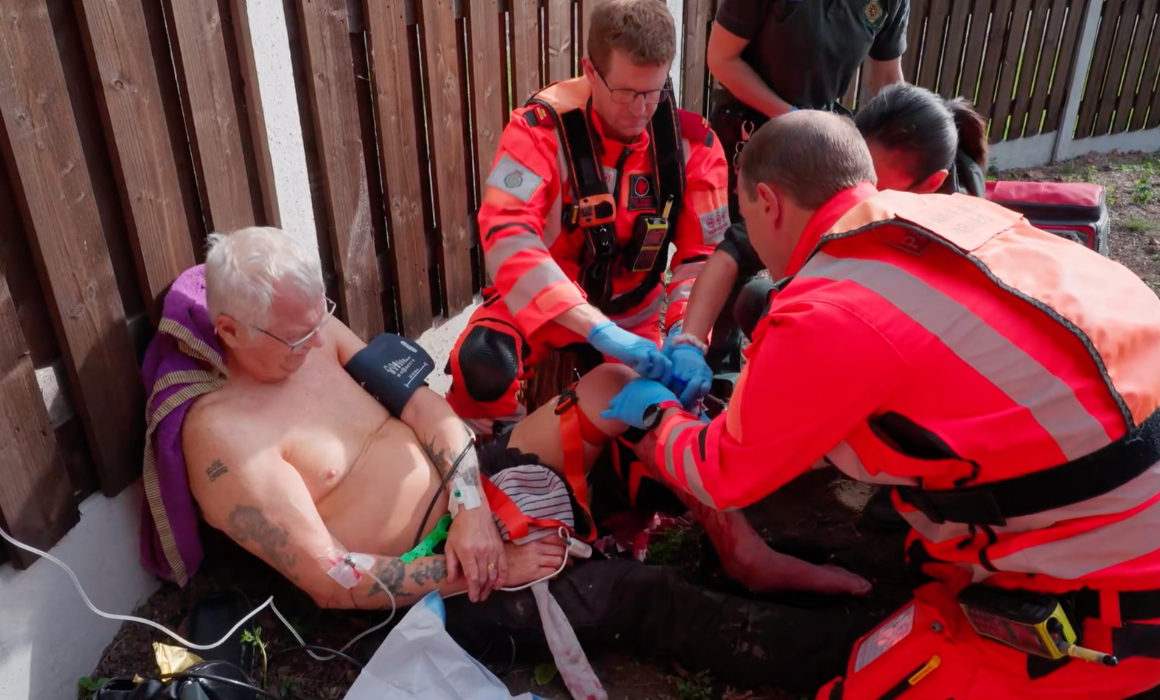
Yorkshire Air Ambulance’s Nostell-based Critical Care Team, consisting of Paramedic Tom Chatwyn and Dr Paul Onion, were scrambled to the scene, flying the 16-mile journey in around eight minutes. They joined a local land ambulance crew already at the scene, who had requested YAA’s advanced medical support, including stronger pain relief, the capability to give blood at the scene, and the expertise of an onboard doctor
Landing in a nearby field, the team made their way to the property where Paul was being treated. He remained calm and composed, though his leg was still bleeding significantly despite the improvised tourniquet.
Dr Paul explained, “When we arrived, Paul said his leg felt wobbly, and that matched exactly what we could see. The saw had completely broken the bone, and the lower leg was barely attached by tissue. It was a serious, life-threatening injury.”
To control the bleeding, Paramedic Tom packed the wound with a special gauze called Celox, designed to rapidly stop severe haemorrhaging. The treatment, often used by the military encourages blood to clot on contact. The team also applied a pressure bandage before replacing the improvised tourniquet with a medical-grade one, positioned higher on the leg for full control.
Dr Paul continued, “Before we arrived, Paul’s son had done an excellent job applying a tourniquet. It had already reduced the blood loss significantly. Without that quick thinking, the outcome could have been very different. Injuries that damage the major arteries or veins can cause catastrophic bleeding in seconds, and the body simply can’t stop it alone.”
Once the bleeding was under control, the team administered ketamine, a powerful pain relief medication commonly used in emergency medicine, known for its dissociative properties. As the drug took effect, the crew carefully realigned Paul’s leg to restore its natural position and reduce the risk of further damage to surrounding blood vessels and nerves. It was then secured in a vacuum splint, which moulded tightly around the limb to keep the broken bones stable during transport.
Dr Paul said, “In Paul’s case, he had two significant injuries, one to the blood vessels, which we managed with the tourniquet, and another to the bone itself. Realigning the leg early gives the best chance for those bones to heal properly once in hospital.”
With the leg stabilised, Paul was transported to Northern General Hospital in Sheffield, where surgeons were waiting. He underwent a five-and-a-half-hour operation to save his leg, during which metal plates were fitted to repair the fractures. He spent ten nights in hospital and is now recovering at home, able to walk short distances with crutches but still facing a lengthy rehabilitation.
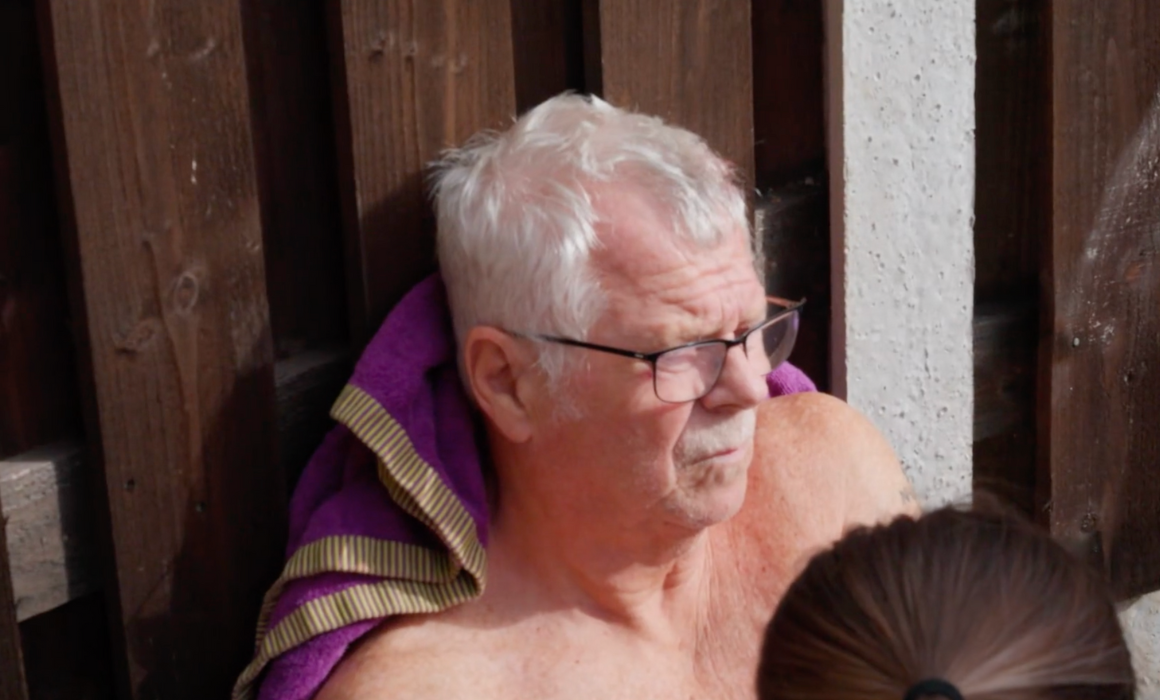
Speaking about the incident, Paul said, “I was helping my son remove a tree stump and thought it would be a quick job. The saw just caught, and before I knew it, I looked down and saw the blood. My son was inside at the time but saw what happened through the window and came running straight out. He stayed calm, called for help, and used a belt to stop the bleeding, I’m so grateful to him for the difference he made before help arrived. I can’t thank everyone enough for what they did that day, from the local ambulance crews to the Yorkshire Air Ambulance team and everyone at the hospital for the care they gave me. I still have a long recovery ahead, but I know how fortunate I am.”
Alongside Paul’s story, this episode also features a teenage motocross rider who shattered his femur, a 68-year-old man who broke his ankle during a cricket match, and a cyclist who suffered multiple broken bones and serious burns after becoming trapped under a van.